Our CEO's Office Had the Worst View in the Building. That's How I Learned What Servant Leadership Actually Looks Like.
Charles 'Chuck' Barbo was the CEO of Shurgard. He gave the lake view to the employee lunchroom and kept his desk facing the freeway. Because he understood who mattered most. A tribute to the leader who taught me what culture is actually built on.
Our CEO's office had the worst view in the building. And it taught me everything about leadership.
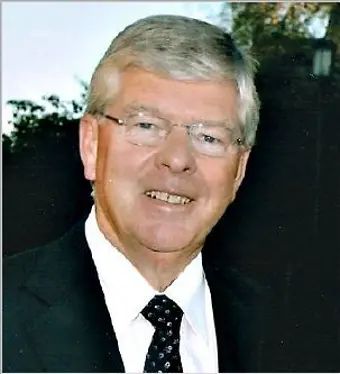
Charles Barbo (Chuck) was the CEO of a Seattle-based real estate investment trust called Shurgard.
In 2001, while Amazon was still figuring out how to turn a profit, Shurgard was expanding profitably as the pre-eminent storage leader across the US and Europe.
Let's be honest. This is not the sexiest industry. Nobody hears "storage" and thinks, "Wow, that's such a glamorous place to be."
But under Chuck's leadership, Shurgard attracted world-class talent. People wanted to work there. And once they did, they stayed.
I worked at our home office on Lake Union recruiting talent and hosting new hire orientation. On orientation days, I'd give an office tour, including a stop where new hires could meet the C-suite.
Chuck loved to welcome new Shurgardians on day one. Not through a welcome email. In person.
No appointment needed. I could walk right into his open office, introduce them, and watch as he shook their hand and welcomed them like they belonged there.
One day, during orientation, he decided to share more than just a handshake.
He reached into his wallet and pulled out a small, worn, folded card. Inside was the Shurgard Constitution: our mission and values.
We gave every new hire one, but Chuck carried his with him everywhere.
That day, he gave an impromptu speech about why it mattered.
He talked about how the mission wasn't just words on a page. It was the foundation of every decision we made.
And how our values weren't for show. They were the standards we held ourselves to, even when it was hard.
We didn't just read our mission at the start of every meeting. We lived it. And so did he.
Instead of a cushy office with a closed door, Chuck's desk sat in an open executive suite with a view of the freeway.
The gorgeous Lake Union view? That was for the employee lunchroom.
Because he knew the people who mattered most were the ones on the front lines.
Every single person who started in the home office spent two weeks working in the field so they understood what it was really like for our store employees.
We never made decisions without thinking first about what the customer needed and what our people needed. We never forgot that the people who mattered most to the company were the ones on the front line.
People say your coworkers won't go to your funeral. Heck, I've even said that.
But many of us who worked with Chuck will prove that wrong.
Because he wasn't just a CEO. The company he built also created a culture that felt like family.
Chuck was the most amazing, transformative leader I've ever known.
He walked the talk. He did what right looked like. He never forgot about the people who mattered most.
The culture he built made us feel like family.
That's his legacy. And it lives on through the thousands of us who had the honor of working with him.
For the framework behind what culture is actually built on, read The Why Behind the Theory.
If leadership like this is what you want to build careers around, come get the whole framework at TheoryOfHireability.com.