The Open to Work Banner Cuts Your Hireability by 26%: I Ran the Test
I paid to test the Open to Work banner on my own photos at a statistically significant confidence level. The results were staggering. Here is the data that started the conversation — and what to do instead.

Let me hold your hand while I tell you the truth about the Open to Work banner. With receipts.
A green banner is sitting on hundreds of thousands of LinkedIn profiles right now, and whether it helps or hurts is an argument that has been running on LinkedIn for years. Everyone has an opinion. Almost nobody has actually tested it.
I got tired of hearing opinions repeated because they sounded smart and informed, so I ran the test myself. Paid data collection on my own professional headshots, with and without the banner, tested against a control image, at a statistically significant confidence level.
What I found was worse than I expected, and it is going to upset some people. Good. I would rather upset you with the truth than comfort you with a lie you cannot use.
Because here is what I already know is coming. Someone reading this is going to say, "That doesn't apply to me, I don't let a banner bias me." I understand the instinct. But the research says otherwise, and I will show you exactly why in a minute.
Brene Brown says clear is kind, unclear is unkind. So let me be clear instead of comfortable. I have the receipts, I have the research, and I am going to walk you through exactly why your brain does this without your permission. Not to make you feel bad. To make sure you are not the only one who does not know.
Find Out How Hireable You Actually Look
645 votes. Real paid data. The Open to Work banner cuts your Hireability by 26%. Find out where else you might be losing ground and exactly how to close the gap.
Take the Hireability Gap AuditWhy Your Profile Photo Matters
We form first impressions in one tenth of a second -- faster than a blink of an eye. That is all it takes for our brains to decide if someone looks competent, likable, and influential (Willis and Todorov, Psychological Science, 2006).
Your profile photo is not just a headshot. It is a business asset that determines whether someone wants to hire, follow, or ignore you. It is your digital handshake -- the first filter through which people see everything else you do online. This is called anchor bias, and it shapes how you are perceived from that point forward.
Your photo alone can increase views to your profile by 21 times (LinkedIn). That is before anyone reads a single word about your experience. Which means your photo is not a formality. It is the first decision point.
The Data
Over the past year, I collected 645 votes across multiple tests -- for myself and my clients. Take the same person in the same outfit with the same smile. Change the lighting, angle, or background, and you will get completely different results.
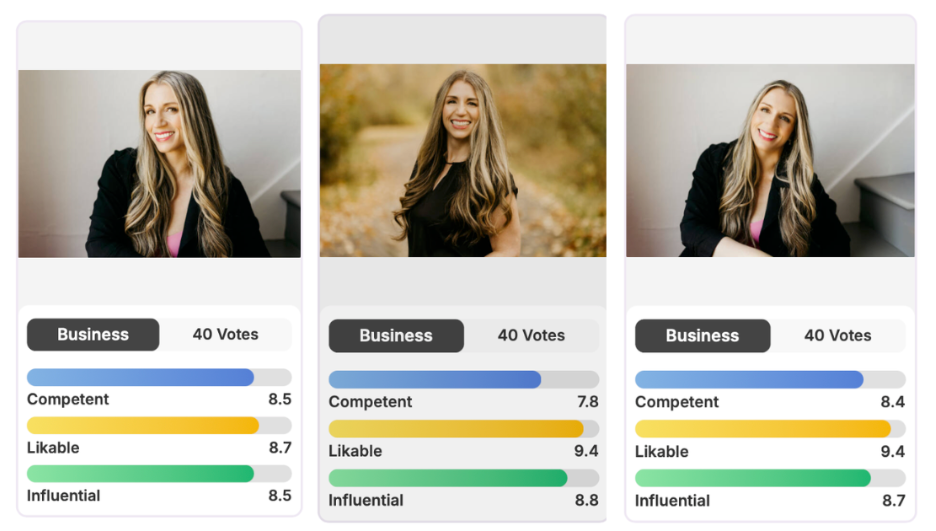
There is one single move that decreases Hireability by an average of 26% across every photo tested.
The Open to Work Banner.

Three professional photos. Same person. Same lighting. Same smile. The only difference: one green ring.
Think about what that 26% hit actually means. Two photos of the same person, same everything, and the only variable is one green ring. A 26% hit is not a small effect. That is the difference between showing up as the obvious hire and being invisible.
One Green Ring Cost 26%. What Are the Other 82 Signals Costing You?
You just saw what a single visual signal does to how hireable you look. The Hireability Gap Audit scores the 83 signals recruiters read on you right now and tells you which ones are quietly discounting you.
Score My 83 SignalsWhy It Happens -- and Why You Are Biased Even If You Think You Are Not
We like to think we are objective. We are not. Our brains make subconscious judgments before we have read a word of someone's profile.
Here is what people always say to me: "I don't let a banner bias me."
I get why you would think that. But you do -- the same way almost everyone thinks they are the exception to bias while everyone else is not. Stanford researchers actually have a name for this: the bias blind spot.
Here is the part most people get wrong. The more confident you are that you are not biased, the more likely it is that you are. In their study, people rated themselves as less biased than the average person -- and even after researchers explained exactly how that bias works, they still insisted their own judgment was accurate and objective.
Insisting "that doesn't apply to me" is not proof you are the exception. It is a separate bias doing exactly what bias always does -- working quietly, convincing you it is not there.
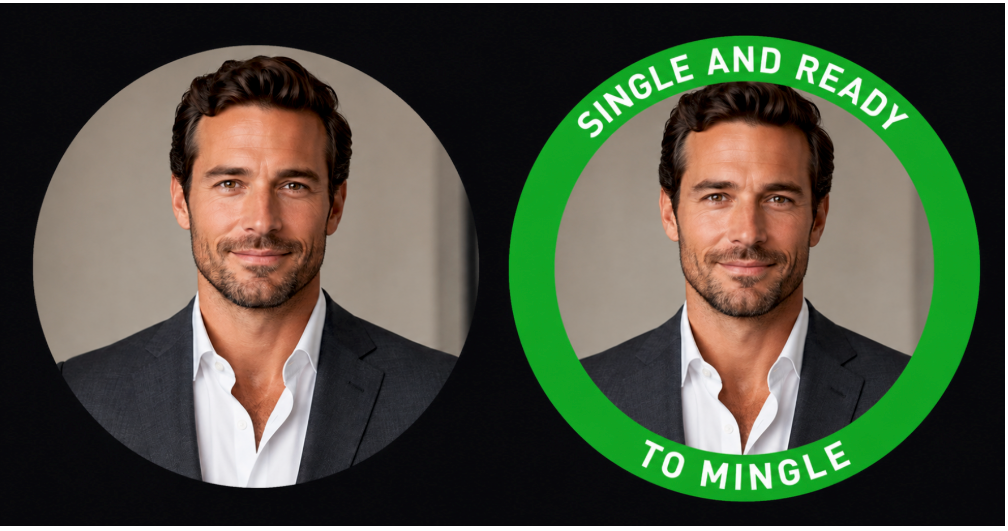
This negative hit is not happening at the level where your brain gets a thoughtful vote. It is happening before your higher-level thinking even kicks in -- the same split second you decide if a face looks friendly or a stranger looks safe. It happens without thinking.
If you want your own reality check, Harvard runs a free test called the Implicit Association Test. You quickly sort faces and words into categories, and your reaction time gives you away before your conscious brain has time to catch up and self-correct. Most people who take it are stunned by their own results. It is what changed my own belief that I was not biased.
The banner is like a clearance sticker for your career. When a store slaps a bright red SALE tag on something, your brain immediately does the math: this was worth more. Now it is not. The Open to Work banner does the exact same thing to you -- before you have even said a word.
What the Banner Actually Does
The banner does two things that are hard to swallow.
First, it instantly decreases your Hireability by 26%. Second, it increases recruiting scammers. Most job seekers see a massive spike in spam and scam messaging the moment they turn on the banner, because you have created a public visual signal that you need something.
Real corporate recruiters use LinkedIn Recruiter -- a licensed seat that costs a minimum of $10,000. Scammers do not. The banner signals need to the wrong people while making you less visible to the right ones.
Recruiters cannot search by the Open to Work frame. You are taking a 26% hit on your perception with no upside on the recruiter search side.
If you need a green frame to let people know you are looking, the real issue is not the banner. It is that your professional relationships are not yet strong enough to reach out to directly. That is not a criticism. Most people were never taught to build that network proactively.
You cannot signal "I will take anything" and "I only want the right role" at the same time. Those two things cancel each other out. What actually moves the needle is becoming a high-value candidate who happens to be available -- not a high-availability candidate waiting to be chosen. That is a completely different signal.
One note: if you are in genuine survival mode -- financially scared, trying to feed your family, needing something to come through fast -- do whatever you need to do. There is no shame in that. Get stability first. But understand the trade-off you are making. The second you broadcast how badly you need something, you lose leverage.
You Cannot Control the Market. But You Can Control How Hireable You Look.
My client got laid off two months ago. Got a great job offer. And negotiated a $10K sign-on bonus. He was unemployed and still negotiated because he understood how to close his Hireability Gap. You can too.
Close Your Hireability Gap ™What to Do Instead
There is a hidden LinkedIn setting that silently flags recruiters the second you are open. No banner. No badge. Nothing visible changes on your profile.
- Go to the Jobs tab
- Click Preferences
- Go to My Interests
- Click Open to Work
- Complete everything under "Tell us what kind of work you're open to"
- Scroll to Visibility
- Select Recruiters only
You now show up in the exact LinkedIn Recruiter searches I used to fill thousands of roles -- without the hit to your Hireability Score.
You Just Fixed One Signal. Now Find the Rest.
Turning off the banner stops the bleeding. It does not make you the obvious hire. The audit shows you exactly which signals to fix next, in priority order, so you stop guessing.
Find My Hireability GapThe Bigger Picture
The Open to Work banner is one signal. But there are 83 distinct signals that determine whether you show up as the obvious hire or another resume in the pile.
The people who stay stuck longest are usually not the least qualified. They are the most underpositioned. They have the skills, the experience, the track record. What they are missing is a clear picture of exactly where the market is discounting them, and why.
My client got laid off two months before I wrote this. Got a great job offer. And we negotiated a $10K sign-on bonus.
He was unemployed and still negotiated a $10,000 sign-on bonus -- because he understood how to close his Hireability Gap. He looked hireable. Not merely qualified. Not simply experienced. Hireable.
The difference between how good you are and how hireable you appear to be is called the Hireability Gap.
You cannot control the market. But you can control how hireable you look.
The Open to Work Banner Is 1 of 83 Signals Recruiters Judge You On.
The Hireability Gap Audit reads the 83 signals recruiters evaluate you on right now without you knowing. Find out exactly where you stand.
Find Out Your Hireability ScoreWhat the Hireability Gap Audit Actually Gives You
This is not a quiz that tells you to "update your LinkedIn." It is the same read a recruiter runs on you in seconds, made visible:
- Your Hireability Score, so you know where you actually stand instead of guessing
- A signal by signal breakdown of all 83 things recruiters evaluate before they ever read your resume
- The specific signals that are discounting you right now, ranked by how much they are costing you
- A prioritized fix list, so you work on the things that move the needle instead of rewriting bullet points for another month
It takes minutes. What you do with it can change what you get paid for the next decade.
Take the Hireability Gap Audit.
Frequently Asked Questions
The full framework for how hiring really works -- and how to position yourself as the obvious choice before a role even opens -- is in the Hireability Gap pillar.
Ready to find out your Hireability Score and close the gap? Take the Hireability Gap Audit.
P.S. If you only take one thing from this: turn the banner off, turn on the Recruiters only setting, and then go find out what the other 82 signals are saying about you. Start with your Hireability Score.
Frequently Asked Questions
By how much does the Open to Work banner decrease hireability?
Across paid testing of professional headshots at a statistically significant confidence level, the Open to Work banner decreased Hireability by 26%. That is not a minor hit — it is the difference between showing up as the obvious hire and being overlooked before a single word of your profile is read.
Why does the Open to Work banner hurt your job search?
We form first impressions in one tenth of a second. The green Open to Work banner works the same way a clearance sticker does on a store shelf — it signals that your value has been discounted before anyone reads a word of your profile. That perception happens below the level of conscious thought, which means even well-intentioned recruiters are biased by it before they realize it.
How do I let recruiters know I am open without the banner?
There is a hidden setting that silently flags recruiters: in the Jobs tab, go to Preferences, then My Interests, then Open to Work. Complete your preferences and set Visibility to Recruiters only. No banner appears on your profile, but you show up in LinkedIn Recruiter searches — the same searches used to fill thousands of six-figure roles.
Does the Open to Work banner increase scam recruiter messages?
Yes. Most job seekers see a significant increase in spam and scam messages the moment they turn on the Open to Work frame. Real corporate recruiters use LinkedIn Recruiter seats that cost a minimum of $10,000. Scammers do not. The banner signals need to the wrong people while making you less visible to the right ones.


